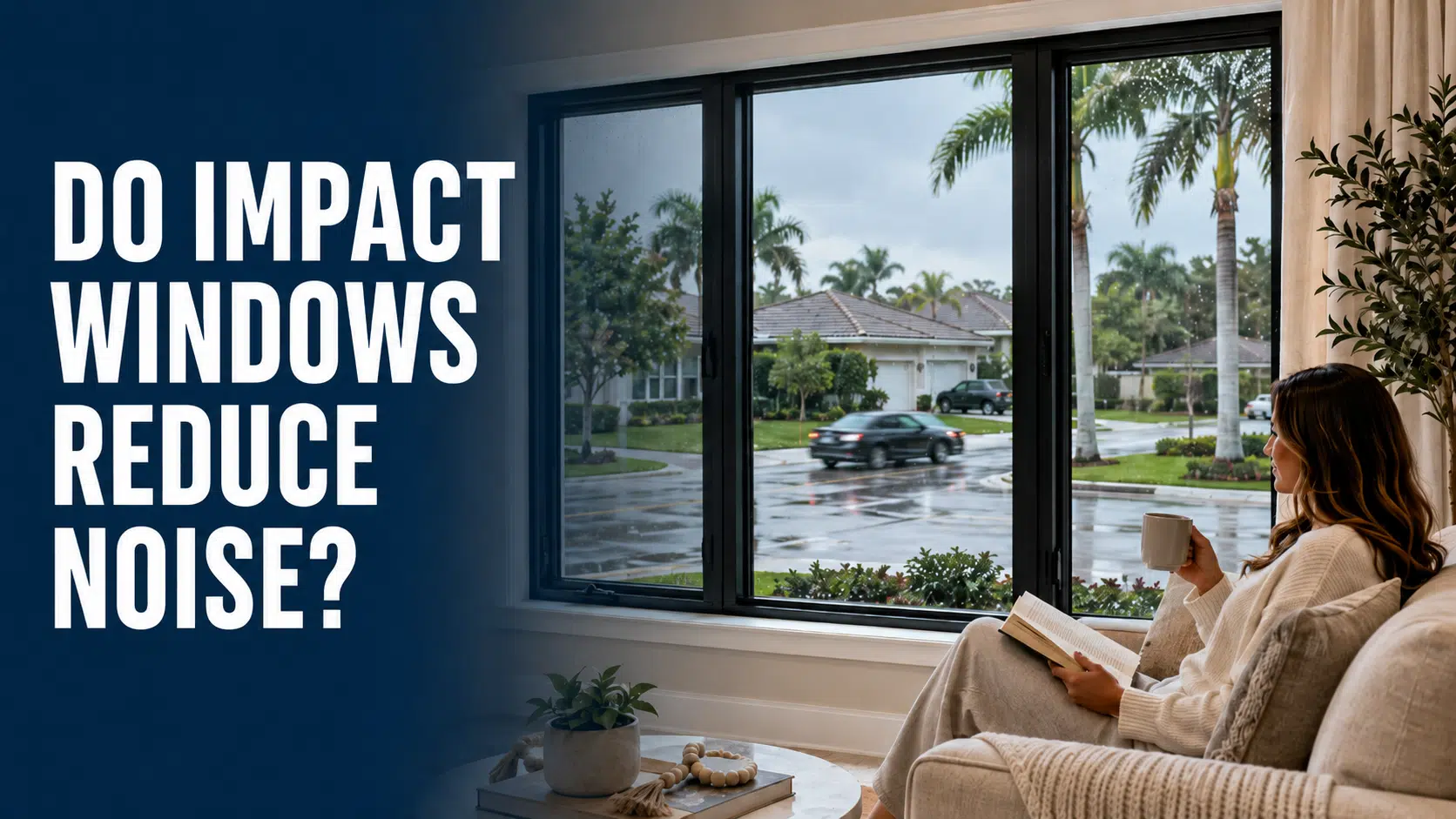
If you live in South Florida, you’ve likely experienced traffic humming down I-95 at all hours, lawn crews firing up leaf blowers before 8 a.m., and the neighbor’s dogs announcing every delivery driver. Impact windows are built for hurricane protection, but do they actually help with all that noise? Here’s what you need to know.
Quick Answer: Yes.
Yes, impact windows reduce noise by a significant margin, but they are not 100% soundproof. Most South Florida homeowners upgrading from older single pane or builder-grade windows can expect roughly 25–50% perceived noise reduction, and impact windows often decrease outside noise by 40% to 60% under favorable conditions. In decibel terms, impact windows reduce noise levels by 25 to 35 decibels compared to standard windows.
Think about the exterior noise sources you deal with daily from traffic and neighbors: traffic on US-1, barking dogs echoing across a canal, pool pumps running next door, or neighbors gatherings in your neighborhood. These are exactly the sounds that quality hurricane impact windows are engineered to tame.
How Impact Windows Reduce Noise: The Science in Simple Terms
The same engineering that lets impact windows survive a flying object during a major storm also makes them dramatically reduce everyday noise. Understanding why starts with how sound travels.
Outdoor noise creates sound waves that strike your window glass and frame, causing vibrations. Those vibrations pass through the material and radiate into your living space. Standard windows-especially single pane windows with STC ratings for common windows ranging from 18 to 38, and typical windows sitting in the upper 20s-do very little to interrupt this process. Impact windows use laminated glass for sound reduction, and that changes the equation.
Laminated glass consists of two thin pieces of glass bonded together with a flexible vinyl interlayer, usually made of polyvinyl butyral (PVB) or sentry glass plus (SGP). This layer absorbs sound waves instead of letting them pass straight through, and laminated glass in impact windows dampens sound vibrations effectively. Thicker glass blocks more sound in impact windows because greater mass resists vibration at mid- and high-frequency ranges like traffic whine and barking dogs.
The sound transmission class (STC)-sometimes also referenced as a sound transmission coefficient-is a single-number rating of how much sound a window blocks. Higher STC means better sound reduction. Here’s how the stc ratings break down compared to common alternatives:
| Window Type | Typical STC Rating |
|---|---|
| Older single pane | 26–28 |
| Standard double pane windows (non-laminated) | 28–32 |
| Standard impact windows | 32–38 |
| Enhanced acoustic impact windows | 38–42+ |
Laminated impact windows generally achieve higher STC ratings than standard single-pane windows. Each 10-point STC increase represents roughly 50% perceived noise reduction, so replacing single-pane windows can reduce noise by up to 40%, and upgrading to a quality impact unit can feel dramatically quieter. Impact windows typically achieve STC ratings between 32 and 42, depending on glass thickness and configuration.
Laminated Glass, Frames & Installation: What Actually Makes the Difference
Not all impact windows reduce noise equally. Results depend on the full system: glass, frame, and installation quality.
The laminated glass advantage goes deeper than just thickness. The vinyl interlayer flexes slightly under vibration, breaking up sound transmission before it reaches the interior panes. This is the same construction that keeps impact resistant glass intact when a flying object strikes during a hurricane-if the glass breaks, it stays bonded to the interlayer instead of shattering inward. Compared to regular glass or non-laminated double pane units, impact glass offers a significant amount of additional damping that traditional windows simply cannot match.
Frame materials matter just as much. Quality impact resistant aluminum or vinyl frames with multiple internal chambers and compression weatherstripping seal out sound leaks far better than the older, thin aluminum frames found on many South Florida homes built before the mid-2000s.
Among frame options, vinyl frames stand out as the quietest choice because they are solid and insulated, unlike hollow metal frames. Vinyl frames are always insulated, which helps protect against sound transmission better than aluminum frames. Aluminum insulated impact frames perform better than standard aluminum, but vinyl frames offer the best noise reduction for impact windows.
High-quality sealing in impact windows prevents noise leaks around the frame, and the airtight installation of impact windows enhances their sound insulation properties.
Even the best laminated glass will underperform if there are gaps, poorly foamed cavities, or out-of-square openings that let sound bypass the glass entirely. At First Impression Doors & More, proper measurement, foam and sealant application, and final inspection are standard on every project-so homeowners get real-world noise reduction, not just a theoretical rating. For example, a homeowner near a busy intersection in West Palm Beach who replaced drafty sliders with new impact units would typically notice road noise dropping from an intrusive roar to a soft background hum after installing properly sealed hurricane windows.
What Kinds of Noises Do Impact Windows Help With in South Florida?
Impact windows are particularly effective against road traffic and neighborhood activity noise-the everyday noise pollution common across Palm Beach, Martin, and surrounding counties. Extremely low-frequency sounds, like subwoofer bass or rumbling semi-trucks, are harder to block completely because they transmit more noise through walls and structure.
Here’s where you’ll notice the biggest difference. Traffic and sirens along routes like Okeechobee Blvd or Dixie Highway become muffled rather than jarring. Impact windows can significantly reduce outdoor noises like traffic and barking dogs, turning sharp sounds into softer, more distant tones. Neighborhood noise-dogs barking, kids splashing by the pool, pressure washers, and early-morning lawn mowers that start at sunrise because of the South Florida heat-loses its edge. You’ll still hear activity, but the sharpness that makes it intrusive is largely blocked.
For homes under flight paths near Palm Beach International Airport, airplanes remain audible but the harshness and volume drop noticeably. Many homeowners near airports report 40–55% perceived reduction in aircraft sound after upgrading.
Weather-related noise also improves. Thunder, heavy rain hammering the roof, and wind during summer storms can rattle older windows. Impact resistant windows stay solid and quieter, which can be especially comforting for your family (children and pets in particular) during hurricane season.
Reduced decibel levels from traffic noise can improve sleep and reduce stress, and many homeowners report sleeping better at night and concentrating more easily during the day after upgrading, even though some faint outside noise will always remain.
Setting Expectations: Noise Reduction vs. “Soundproof” & How to Maximize Results
Windows must have an STC rating of 45 or higher to be considered truly soundproof-a threshold that even high quality impact windows rarely hit in standard residential configurations. Enhanced acoustic windows can reach STC ratings of 38–45, getting close but still not delivering total silence. That’s perfectly fine for most life situations; the goal is practical quiet, not a recording studio.
Perceived quiet depends on several factors beyond the window itself. Walls, exterior doors, roof assemblies, and even small penetrations like outlets and vents on exterior walls can all transmit sound into your space. If those weak points remain, windows solve only part of the problem.
What you can realistically expect in busy parts of South Florida: outside conversations become muffled, barking dogs sound more distant, and traffic turns into a softer background hum rather than something you constantly hear. To maximize results alongside new impact windows, consider these steps:
- Upgrade to impact front doors and impact patio doors
- Upgrade to solid-core interior doors to improve sound reduction
- Seal gaps around electrical boxes on exterior walls
- Use soft furnishings like rugs and curtains to absorb echo indoors
For very noisy locations-right on a major roadway or adjacent to commercial development-ask about enhanced acoustic impact options with thicker or asymmetric laminated glass and insulated glass units. A consultation with a knowledgeable local company helps set realistic expectations based on your specific street, building type, and existing construction.
Choosing Impact Windows for Noise Reduction with First Impression Doors & More
First Impression Doors & More is a South Florida specialist in hurricane-rated, impact resistant windows and doors that deliver meaningful noise reduction benefits alongside superior design and storm protection. We invite you to visit one of our local showrooms, including the West Palm Beach window showroom, to hear the difference between regular glass and laminated impact glass in person.
Our staff can walk you through STC ratings, explain glass options from standard laminated to enhanced acoustic configurations, and help you balance budget, hurricane protection, energy efficiency, and sound reduction goals. Because we also supply and install front doors, patio doors, and commercial projects, we can address every major sound pathway in your home-not just windows.
Ready to make your home quieter? Contact us at 561-944-2099 or request a free in-home estimate online, and we’ll measure your existing openings, discuss your noise concerns-whether it’s traffic, barking dogs, or airplanes-and recommend the right solution. Upgrading to quality impact windows is one of the most effective ways to combine hurricane protection, security, energy savings, and everyday noise reduction in your South Florida home.