Your front door is one of the first things people notice about your home. It also plays an important role in your home’s security, energy efficiency, and protection during hurricane season.
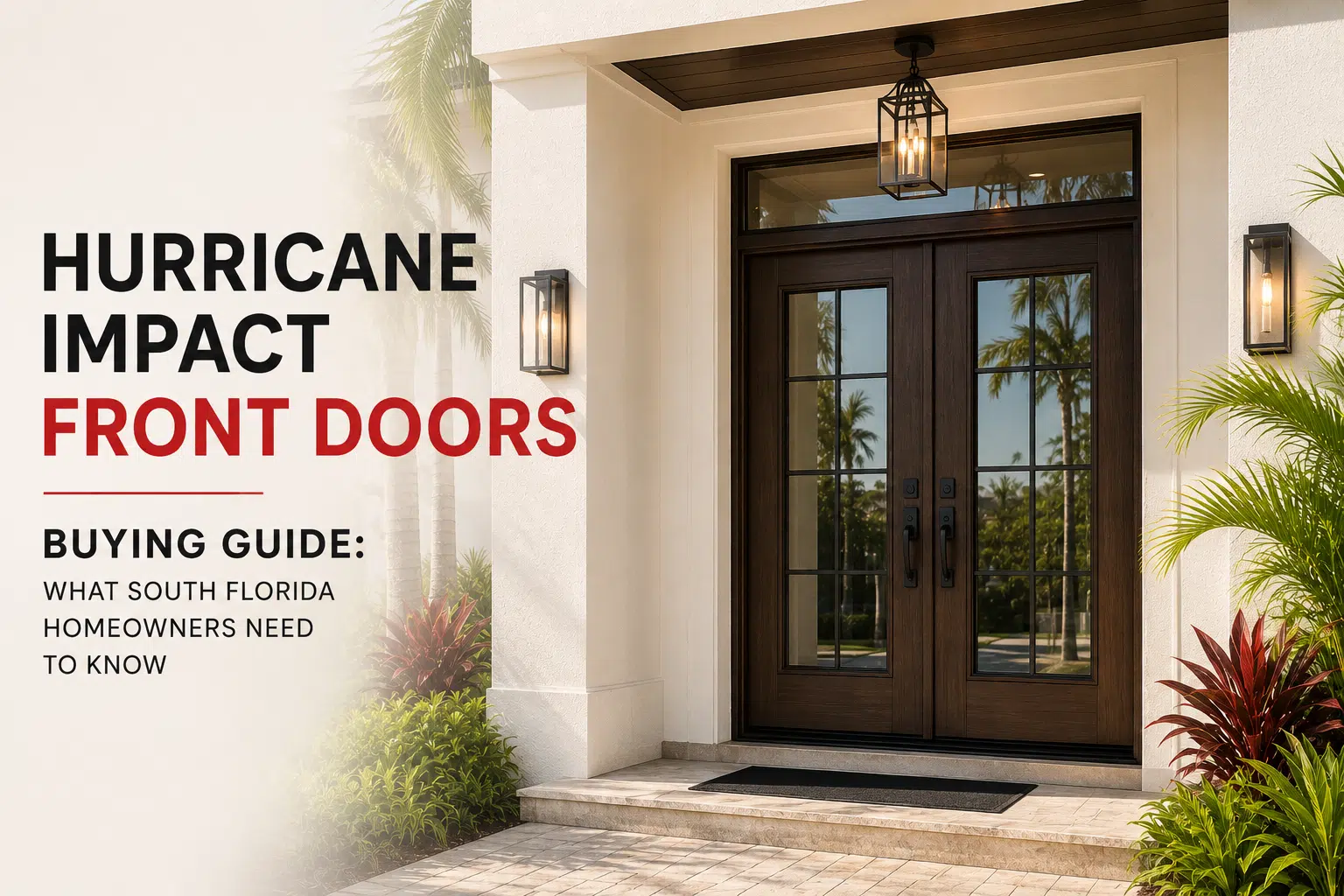
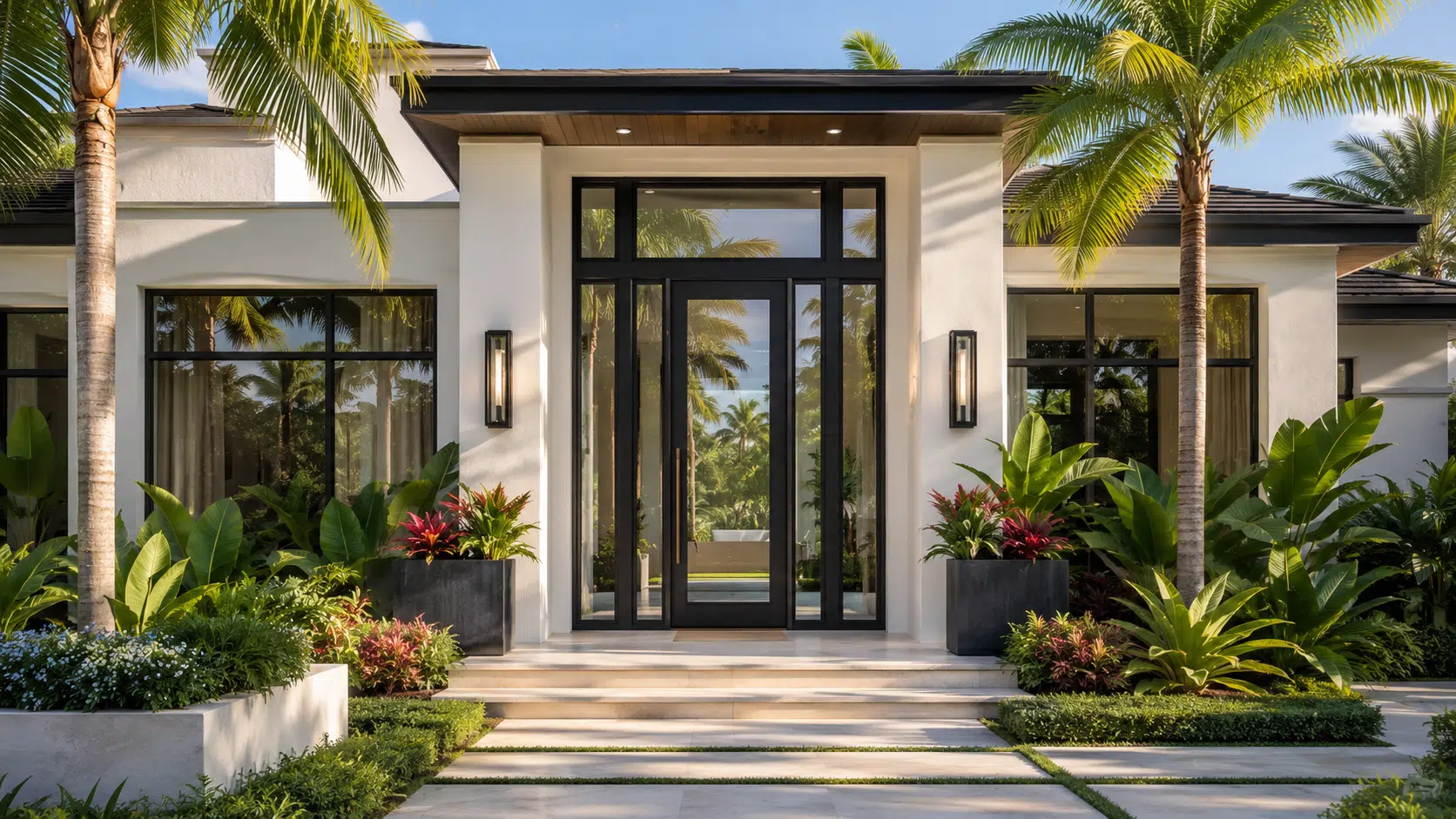
For many South Florida homeowners, a glass exterior front door offers the right balance of function and design. It can bring more natural light into a dark entryway, improve curb appeal, and make a foyer feel more open without sacrificing privacy or storm protection.
Today’s glass front doors are also far more advanced than older styles. Impact-rated glass, insulated panels, reinforced frames, and modern locking systems make it possible to create a bright, attractive entrance designed for the demands of South Florida living.
Why Choose a Glass Front Door?
One of the biggest advantages of a glass front door is the amount of natural light it can bring into your home.
A solid front door can leave an entryway feeling dark, especially in homes with smaller foyers or limited nearby windows. Adding glass allows daylight to enter the space and can make the area feel larger, warmer, and more inviting.
Glass front doors are also available in a wide range of styles. Whether your home is traditional, coastal, Mediterranean, Craftsman, mid-century modern, or contemporary, there are glass configurations that can complement its architecture.
You can can compare several impact front door styles (see our Front Door Buying Guide) including decorative inserts, half-lite doors, full-lite designs, sidelites, and transoms.
Choosing the Right Amount of Glass
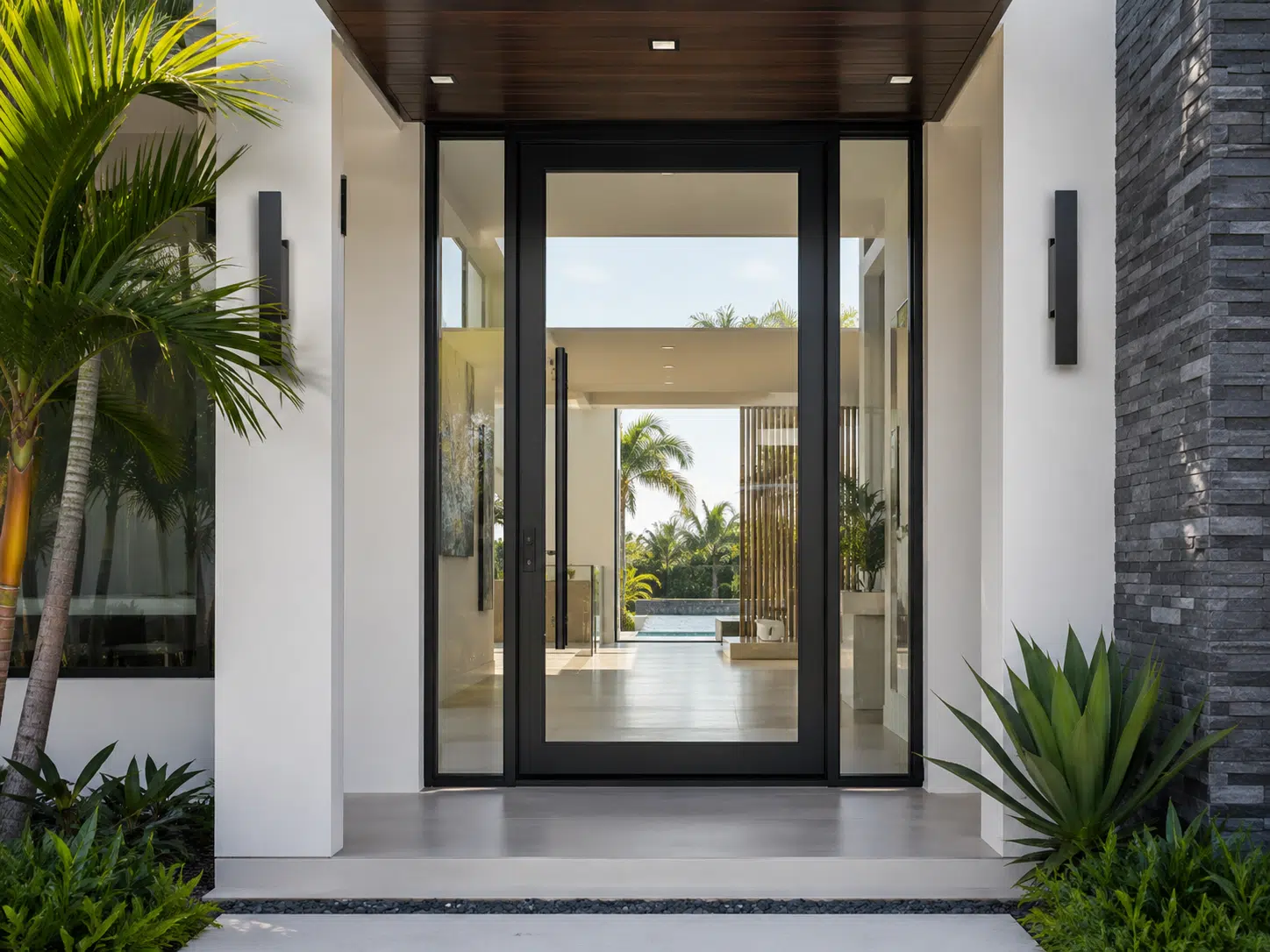 The amount of glass in a door is often described as its “lite” configuration. The right option depends on how much light, privacy, and visibility you want.
Full-Lite Doors
Full-lite doors feature glass across most of the door slab. They are especially popular in modern and contemporary homes because of their clean appearance and ability to bring a significant amount of light into the entryway.
Privacy glass, tinting, decorative patterns, or interior window treatments can be added when homeowners want the brightness of a full-lite door without a clear view into the home.
Three-Quarter-Lite and Half-Lite Doors
These doors place glass in the upper portion of the door while keeping the lower section solid.
They offer a comfortable balance between natural light and privacy and work well with traditional, Craftsman, transitional, and coastal-style homes.
Decorative Glass Inserts
Decorative inserts allow homeowners to add glass without replacing the entire look of a paneled front door. Depending on the design, inserts may include frosted sections, geometric patterns, textured glass, or decorative metalwork.
Impact-rated inserts may also be available for certain fiberglass door systems, giving homeowners the opportunity to combine storm protection with a more customized appearance.
Sidelites and Transoms
Sidelites are narrow glass panels installed beside the door. Transoms are glass panels installed above it.
These features can make an entrance feel wider and more impressive while bringing additional light into the home. They can be used with single doors, double doors, and larger custom entry systems.
Glass Styles and Privacy Options
Adding glass to your front door does not mean giving up privacy. There are several ways to control visibility while still allowing natural light into the home.
Clear Glass
Clear glass provides the most light and visibility. It can work well for homes with deeper setbacks, gated entryways, covered porches, or landscaping that creates separation from the street.
Frosted and Etched Glass
Frosted and etched glass allows light to pass through while obscuring the view into the home. These options are popular in neighborhoods where homes are closer together.
Textured Glass
Rain glass, reeded glass, hammered glass, and other textured designs provide varying levels of privacy while adding visual interest.
Decorative and Beveled Glass
Decorative glass can include beveled edges, geometric patterns, metal accents, or traditional designs. It is often used to create a more distinctive or formal entryway.
Internal Blinds
Some door systems are available with blinds sealed between the panes of glass. This provides adjustable privacy without exposed cords, exterior blinds, or additional cleaning.
Choosing a Door Material
The door material affects its appearance, maintenance needs, durability, and resistance to South Florida’s heat and humidity.
Fiberglass Doors
Fiberglass is one of the most popular options for South Florida homes. It resists warping, rotting, and moisture damage and requires relatively little maintenance.
Fiberglass doors are available in smooth finishes as well as wood-grain textures that provide the appearance of stained wood without the same upkeep.
Wood Doors
Wood offers a distinctive, high-end appearance and can be customized in many styles, stains, and finishes.
Because South Florida homes are exposed to strong sun, humidity, rain, and salt air, exterior wood doors require ongoing maintenance. Regular refinishing and sealing help protect the door and preserve its appearance.
Aluminum Doors
Aluminum doors offer strength, durability, and a clean appearance that works especially well with modern and contemporary homes. Aluminum is also resistant to rust, making it a practical option for South Florida’s humid and coastal environment.
These doors can accommodate large glass panels and slimmer frames while still providing the structural performance required for many impact-rated entry systems.
Iron Doors
Iron doors provide a distinctive architectural appearance and can be customized with glass, decorative scrollwork, divided-lite patterns, and a variety of finishes.
They may also be necessary for certain oversized openings, radius-top doors, and custom entry configurations that cannot be easily achieved with other materials. Because iron doors are substantial systems, proper finishing, weather protection, and professional installation are especially important.
Matching the Door to Your Home
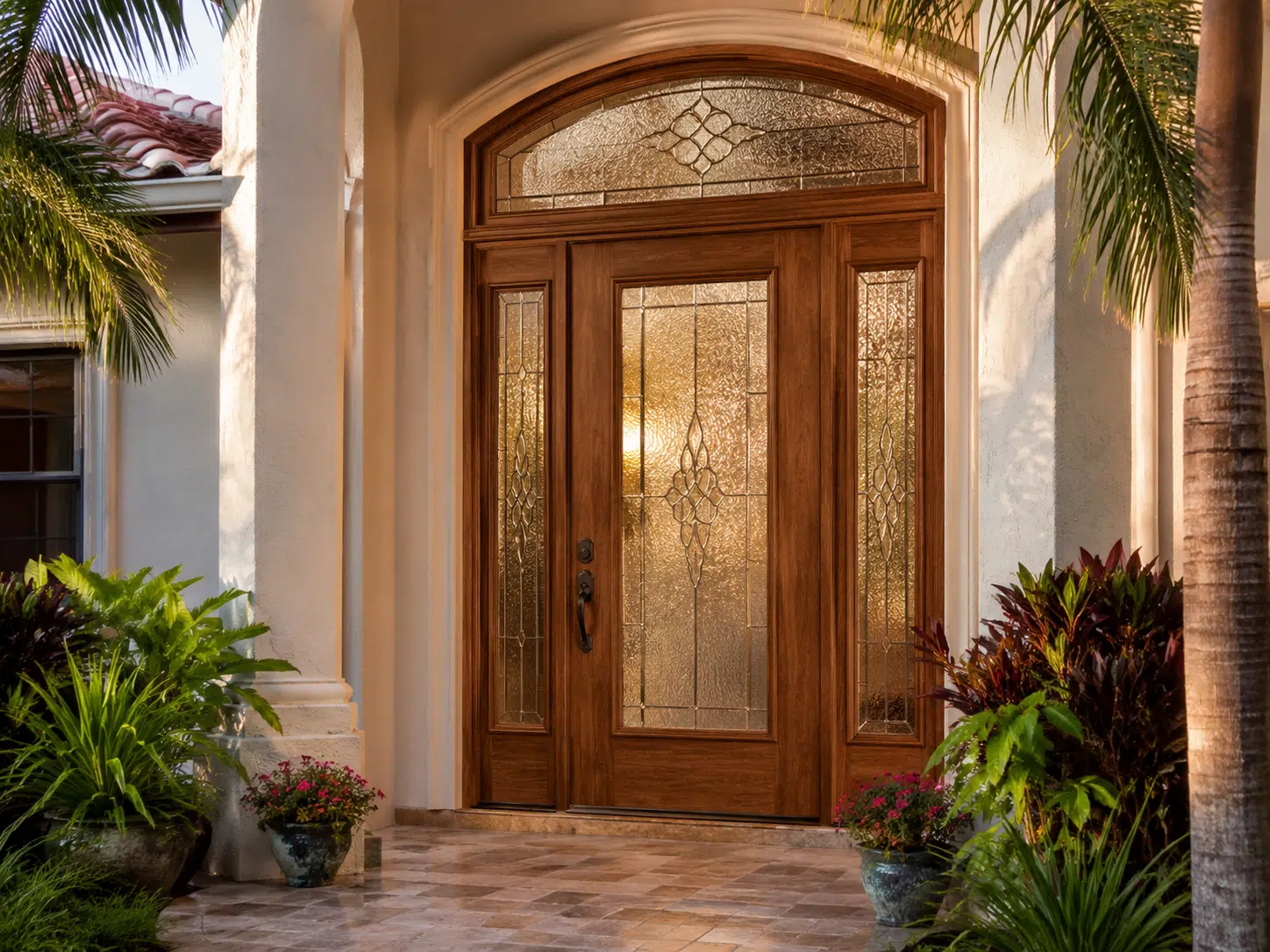 The best front door should feel like a natural extension of the home rather than a separate design element. Traditional and Craftsman-style homes often pair well with divided glass, decorative inserts, or upper-lite configurations.
Mid-century homes may benefit from narrow vertical glass panels or simple geometric designs.
Contemporary homes often use larger glass panels, minimal framing, dark finishes, and clean horizontal or vertical lines.
Mediterranean and coastal homes may incorporate decorative glass, warm wood finishes, double doors, or wider entry systems with sidelites.
A door specialist can help compare options against your home’s exterior colors, roofline, windows, hardware, and architectural details.
Impact-Rated Glass and Hurricane Protection
For South Florida homeowners, appearance is only part of the decision. The door must also be appropriate for the home’s location and local building requirements.
Impact-rated glass is designed with a durable interlayer that helps hold the glass together when struck. Even when the outer glass is damaged, the interlayer helps prevent the opening from being fully breached.
A hurricane-resistant entry system involves more than the glass itself. The door slab, frame, hardware, anchoring, and installation must work together as a tested system.
When comparing doors, ask whether the complete assembly is approved for the required wind zone and opening conditions for your property.
Security Features to Consider
Glass front doors can be both attractive and secure when the right materials and hardware are used.
Features to consider include:
- Impact-resistant laminated glass
- Reinforced frames
- Multi-point locking systems
- Quality deadbolts and handle sets
- Properly secured hinges
- Professional installation and anchoring
A well-built glass entry door should be selected as a complete system rather than choosing the glass, frame, and hardware separately without considering how they perform together.
Energy Efficiency in South Florida
A front door receives direct exposure to outdoor heat, sunlight, wind, and moisture. Choosing an energy-efficient system can help reduce heat transfer and improve comfort near the entryway.
Insulated glass typically uses multiple panes separated by a sealed space. Low-E coatings may also be added to help limit the amount of solar heat entering the home while still allowing natural light through.
The overall performance of the door depends on the glass, frame, weatherstripping, threshold, installation quality, and amount of direct sun the entrance receives.
Homeowners with west-facing doors or entrances with limited shade may want to pay particular attention to glass coatings, tinting, and heat-control options.
If you are considering a broader exterior upgrade, you may also want to supplement your door project with hurricane impact windows, particularly when improving comfort and hurricane protection throughout the home.
Why Professional Installation Matters
Even a high-quality door may not perform correctly when it is improperly installed.
The frame must be square, level, securely anchored, and properly sealed. Weatherstripping should make consistent contact, the threshold must help prevent water intrusion, and the locking hardware should align without forcing the door.
For impact-rated systems, installation must also follow the manufacturer’s specifications and applicable building requirements.
Professional installation helps ensure the door opens and closes properly, resists water intrusion, maintains energy efficiency, and performs as intended during severe weather. You can also learn more about our local manufacturing, custom-fit process, and installation approach on the Why Choose First Impression page.
Caring for a Glass Front Door
Glass front doors are generally straightforward to maintain, although the glass may need more frequent cleaning than a solid door.
Use a soft cloth and a non-abrasive cleaner that is appropriate for the glass and its coatings. Avoid harsh materials that could scratch decorative finishes, tinting, or Low-E surfaces.
The frame and door slab should also be inspected periodically.
Fiberglass usually requires little more than routine cleaning. Wood doors may need resealing or refinishing depending on sun and moisture exposure. Aluminum doors should be cleaned periodically to remove dirt, salt, and environmental buildup, particularly in coastal areas. Iron doors should be inspected for scratches, chips, or other damage to their protective finish so exposed areas can be addressed before corrosion develops.
Weatherstripping, caulking, hardware, and the threshold should also be checked as part of regular home maintenance.
Questions to Ask Before Choosing a Glass Front Door
Before making a final decision, consider asking:
- Is the complete door system impact rated?
- Is it approved for my property’s location and opening requirements?
- What level of privacy does the glass provide during the day and at night?
- How much direct sunlight does the entrance receive?
- Does the glass include insulating or heat-control features?
- What maintenance will the door material require?
- Are the frame, hardware, and locking system included?
- Who will handle permitting and installation?
- What warranties are included with the product and installation?
It can also be helpful to bring photos of your current entryway when visiting one of our South Florida showrooms. A full exterior photo and a closer image of the existing door can help a specialist recommend styles that fit the proportions and architecture of your home.
Explore Glass Front Door Options With First Impression Doors & More
The right glass front door can brighten your entryway, improve curb appeal, and provide the storm protection and security South Florida homes require.
First Impression Doors & More can help you compare impact-rated glass options, door materials, privacy levels, finishes, hardware, and complete entry systems. You can see products in person at one of our four South Florida showrooms or schedule a free in-home consultation for personalized recommendations.
Call 561-944-2099 or schedule your free consultation online to begin exploring front door options for your home.